Navigating the Language Barrier in Ukraine: Translation Apps and Tips
How English Is Used in Ukraine in 2026
For travelers in Ukraine, the language barrier is usually manageable, but it depends on where you are and who you are speaking to. In major cities such as Kyiv, Lviv, Odesa, and Dnipro, younger people, hotel staff, many restaurant employees, and some taxi drivers often understand at least basic English. In tourist-facing businesses, you are more likely to find menus, signs, and booking platforms with English support. Outside the main cities, English becomes much less common, especially in small towns, local markets, train stations, and among older residents.
It helps to set expectations correctly: you may be able to get by in English for simple tasks in central areas, but you should not rely on it for everything. If you are traveling for business, visiting smaller communities, or using public transport extensively, having a translation tool ready will save time and reduce stress. Even a few words in the local language can make a big difference in how people respond to you.. Travel insurance for Ukraine
Ukraine is multilingual in practice, but Ukrainian is the state language and the language you will see most often in official communication, signage, and public services. Russian is still understood by many people, particularly in some regions and among older generations, but its everyday use varies widely by location and personal preference. For travelers, the best approach is to be respectful, neutral, and flexible rather than assuming one language will work everywhere.
Best Translation Apps for Travelers
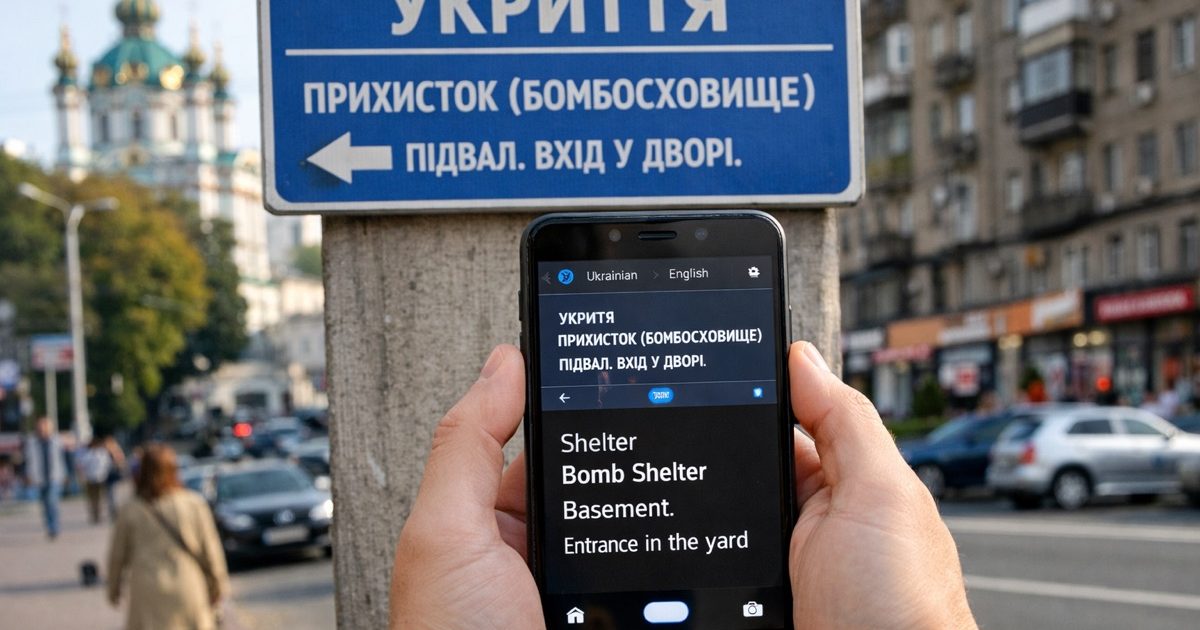
A reliable translation app is one of the most useful tools for a trip to Ukraine. Google Translate remains the most practical choice for many travelers because it supports Ukrainian, Russian, English, and dozens of other languages. Its camera translation is especially helpful for menus, signs, pharmacy labels, and documents. You can also download offline language packs before arrival, which is important if your mobile data is limited or you are traveling through areas with unstable connectivity.
DeepL is another strong option, especially for written text. Its translations often sound more natural than machine output from simpler apps, which can help when you are reading longer messages, emails, or formal notices. However, DeepL is not always as convenient for live, on-the-spot travel use as Google Translate, and its language coverage and features may vary by platform.
For quick conversations, Microsoft Translator can also be useful, particularly if you want a clean interface and easy text input. If you plan to communicate frequently with hosts, drivers, guides, or local contacts, it is smart to test more than one app before your trip. Some travelers also use built-in translation features in WhatsApp, iPhone, or Android keyboard tools for short exchanges. No app is perfect, so the best strategy is to combine translation software with simple wording, patience, and offline preparation.
Ukrainian vs Russian: What Travelers Should Know
One of the most common questions visitors have is whether they should use Ukrainian or Russian. The safest answer is to start with Ukrainian when possible, because it is the official language and the most appropriate default in public settings. Even if your Ukrainian is limited to a few words, greetings such as “dobryi den” and “dyakuyu” are usually appreciated. Many locals will switch to another language or help you in English if they can.
Russian is understood by a large part of the population, but its use is more sensitive than it once was, and attitudes can differ significantly by region and personal background. As a visitor, you should avoid assuming that Russian is the easier or more welcome option. If you are using a translation app, choose the language that matches the person you are speaking with or the text you are reading, rather than trying to guess based on your own convenience.
In practical terms, if you need to ask for directions, order food, or handle transport, the key is clarity rather than fluency. A short sentence in Ukrainian, a translated phrase shown on your screen, or a written address can be enough. If you make a mistake, stay polite and move on. Most people are accustomed to helping foreigners and will appreciate the effort more than perfect grammar.
Communication Strategies That Work in Real Situations
The most effective communication strategy in Ukraine is to keep messages short and specific. Instead of trying to translate a full paragraph, break your request into simple parts: where you want to go, what time you need it, and what you need help with. In a taxi, for example, show the destination in Ukrainian or copy the address from a map app. In a restaurant, point to the menu item or use the camera translation feature to confirm ingredients.
Written communication often works better than spoken communication. If you are arranging a pickup, meeting a host, or asking a hotel for assistance, send a text message rather than relying on a phone call. Many Ukrainians are comfortable reading short messages even when speaking English is difficult. Screenshots, maps, booking confirmations, and saved addresses are especially useful when you need to show information quickly.
Body language and context also matter. Speaking slowly, avoiding slang, and using numbers clearly can prevent misunderstandings. If you need help with public transport, show the station name, route number, or departure time instead of asking a broad question. When in doubt, ask one question at a time. This reduces confusion and makes translation apps more accurate.
Practical Tips for Offline and On-the-Go Use
Before you travel, download offline Ukrainian and Russian language packs in your translation app. This is particularly important if you plan to cross regions, use trains, or spend time in places where mobile signal may be weak. Also save essential phrases in your phone notes: greetings, thank you, please, excuse me, where is, how much, pharmacy, hospital, station, and help. Having these ready can be faster than typing every time.
It is also smart to prepare key addresses in both Latin and Cyrillic script. Many navigation apps can display locations in local script, which helps when showing a driver or asking for directions. If you are traveling with important documents, medication names, or food restrictions, store translated versions of those details on your phone and in a paper backup. That is especially useful in emergencies or when speaking with medical staff.
If you are staying for more than a few days, consider learning a small set of high-value phrases. Even basic pronunciation helps build trust and makes everyday tasks easier. Travelers who use This guide often combine translation tools with local SIM cards or eSIM data to stay connected, which makes live translation and map use much smoother.
Common Mistakes to Avoid
A frequent mistake is speaking louder instead of speaking more clearly. Most language barriers are not solved by volume. Another common issue is using long, complex sentences and expecting a translation app to handle nuance perfectly. Machine translation works best with short, direct language. If you get a strange result, simplify the sentence and try again.
Do not assume that every person you meet will be comfortable with English, Russian, or even written text on a screen. Some people may prefer Ukrainian only, some may know basic English, and some may rely on a family member or colleague to translate. Being flexible and patient will help more than insisting on one method of communication.
Finally, avoid using translation apps without checking the result in situations that matter, such as medical issues, legal questions, or transport changes. If the message is important, verify it through a second source, ask for confirmation, or use a written phrase that can be shown directly. With a bit of preparation, language differences in Ukraine are very manageable, and they should not prevent you from having a smooth trip.
Continue reading
All articles
Top Museums in Ukraine: History, Art, and War Memorials
Ukrainian Festivals and Events to Attend in 2026
Ukrainian Craft Beer Scene: Breweries and Bars Worth Visiting
Religious Sites in Ukraine: Churches, Cathedrals, and Monasteries Worth Visiting

Ukrainian Coffee Culture: A Guide to Cafes and Coffee Traditions