Ukrainian Coffee Culture: A Guide to Cafes and Coffee Traditions
Why Coffee Matters in Ukraine
Coffee is one of the most visible everyday rituals in Ukraine. In cities large and small, cafes are social spaces where people meet before work, hold informal business conversations, study, or simply take a break from the day. For travelers, understanding coffee culture is an easy way to read the rhythm of local life and feel more comfortable in urban settings.
Ukrainian coffee culture blends Central European traditions, Soviet-era habits, and a strong modern specialty scene. In recent years, independent roasters and baristas have transformed the cafe experience in Kyiv, Lviv, Odesa, Kharkiv, and other cities. At the same time, classic coffee drinks and old-style coffee houses remain popular, especially in historic centers and neighborhood institutions.. Travel insurance for Ukraine
If you are visiting Ukraine, coffee is also a practical part of the day. Cafes often serve as reliable places to warm up in winter, charge a phone, work remotely, or wait out a short rain shower. We recommend treating cafes as both a cultural experience and a useful travel stop, especially when you are exploring unfamiliar districts on foot.
Lviv and the Historical Coffee Tradition
Lviv is the symbolic capital of Ukrainian coffee culture. The city’s coffee identity is closely tied to its Austro-Hungarian past, when cafe life became part of urban culture in the 19th and early 20th centuries. Today, Lviv still markets itself as a coffee city, and its historic center is filled with themed cafes, roasteries, and places that celebrate the city’s literary and bohemian heritage.
Visitors often hear stories about Yuriy Kulchytsky, a legendary figure associated with bringing coffee to Vienna after the Battle of Vienna in 1683. While the story is part history and part legend, it reflects the broader regional coffee tradition that connects Lviv with Central Europe. In practice, coffee in Lviv is less about a single origin story and more about a long tradition of cafe conversation, craftsmanship, and hospitality.
When in Lviv, look for cafes in the Old Town, especially around Rynok Square and nearby side streets. Many venues offer classic espresso drinks, traditional desserts, and coffee served with a strong sense of atmosphere. Some cafes lean into history with vintage interiors and old recipes, while others focus on modern brewing methods and local beans. Both are worth trying if you want to understand how the city balances heritage and innovation.
Specialty Cafes in Kyiv, Lviv, Odesa, and Kharkiv
Ukraine’s specialty coffee scene has matured quickly, and major cities now offer high-quality espresso bars, roasteries, and cafes with careful attention to sourcing and extraction. In Kyiv, you will find a broad range of options, from minimalist coffee bars in central districts to larger cafes with work-friendly seating and filter coffee menus. The capital is a good place to try single-origin espresso, pour-over coffee, and seasonal drinks made by experienced baristas.
Lviv remains the most coffee-focused city for tourists, but its scene is not only about tradition. Modern roasteries and third-wave cafes are easy to find in the center and in newer districts. In Odesa, coffee culture often mixes with the city’s relaxed, seaside atmosphere. Many cafes there combine strong coffee with brunch menus and late opening hours, making them useful for travelers who prefer a slower pace. Kharkiv also has a notable independent cafe culture, with local roasters and compact specialty spots that attract students, freelancers, and coffee enthusiasts.
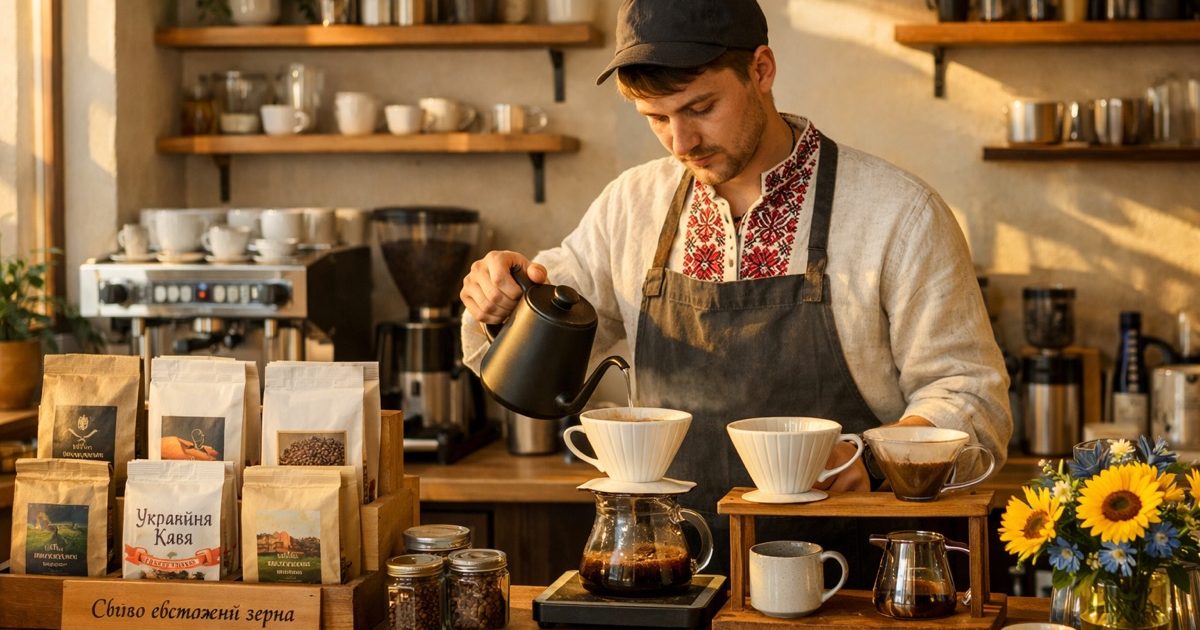
When choosing a cafe, check whether it roasts its own beans or lists the roast date, origin, and brew methods. A good specialty cafe will usually offer more than standard espresso and cappuccino. You may see V60, AeroPress, batch brew, flat white, and alternative milk options. Prices are generally lower than in many Western European capitals, but the best cafes often charge more for carefully prepared drinks and higher-quality beans.
Common Ukrainian Coffee Drinks and How to Order
The most common coffee order in Ukraine is still espresso-based. You will easily find espresso, americano, cappuccino, latte, and flat white in almost every city cafe. Many Ukrainians also drink coffee with milk or cream, and sweetened coffee remains popular. In some places, especially older cafes, you may still see coffee served in a more traditional style with water on the side or accompanied by a small sweet treat.
Do not be surprised if menus include both Ukrainian and English names, especially in tourist areas and specialty cafes. If you want a stronger drink, order espresso or doppio. If you prefer something smoother, cappuccino or flat white are common choices. For a lighter option, americano is widely available. Filter coffee is less universal than espresso, but it is easy to find in specialty cafes and is often a good choice if you want to taste the beans more clearly.
A practical tip for travelers is to ask about sweetness and milk before ordering, especially if you are used to a specific style at home. Some cafes will automatically prepare drinks in a standard local style, while others are happy to adjust. If you are sensitive to caffeine, ask whether the cafe offers decaf, because availability can vary. In busy city centers, many cafes also offer coffee to go, but sit-down service is still common and often more relaxed than in fast-service chains.
Cafe Etiquette and Practical Tips for Visitors
Cafe etiquette in Ukraine is straightforward, but a few habits will help you blend in. It is normal to enter, look at the menu, and choose a table before ordering if the cafe uses table service. In smaller specialty cafes, you may order at the bar and either wait for your drink or take a number. If the cafe is busy, do not assume a table is free unless it is clearly unoccupied and not reserved.
Tipping is appreciated but usually modest. In many cafes, rounding up the bill or leaving about 5-10% is common if service was good. Card payments are widely accepted in cities, but it is still smart to carry some cash for smaller cafes or temporary power or network issues. In 2026, contactless payment is normal in major urban areas, yet travelers should always have a backup method.
If you plan to work from a cafe, check how long you can stay and whether the venue is laptop-friendly. Some specialty cafes welcome remote workers, while others prefer a quicker turnover during peak hours. Avoid taking large conference calls in very small spaces, and be mindful of local customers who may be there to meet friends rather than work. Finally, remember that coffee culture in Ukraine is social: a cafe visit is often less about rushing and more about enjoying the moment, the conversation, and the atmosphere.
How to Explore Coffee Culture on Your Trip
The easiest way to experience Ukrainian coffee culture is to combine historic cafes with modern specialty spots. In Lviv, compare a traditional cafe in the Old Town with a contemporary roastery nearby. In Kyiv, try one neighborhood cafe in the center and another in a residential district to see how coffee habits differ by area. In Odesa, pair a coffee stop with a walk through the city’s historic streets or along the waterfront, and in Kharkiv, look for student-friendly cafes near central boulevards or cultural spaces.
If you are planning a longer stay, use cafes as part of your daily route rather than as a standalone stop. They are convenient places to rest between museums, markets, and walking tours, and they often reveal more about a neighborhood than major attractions do. Ask baristas about local roasters, seasonal drinks, or the cafe’s history; many are happy to recommend other places nearby.
For travelers who want to stay organized while moving between cities, cafes can also be a useful place to check maps, confirm transport, and recharge devices. If your trip includes multiple destinations or you want extra peace of mind while traveling in Ukraine, services such as This guide can help you stay prepared. However you explore, coffee is one of the simplest and most enjoyable ways to connect with everyday Ukrainian life.
Continue reading
All articles
Navigating the Language Barrier in Ukraine: Translation Apps and Tips
Top Museums in Ukraine: History, Art, and War Memorials
Ukrainian Festivals and Events to Attend in 2026
Ukrainian Craft Beer Scene: Breweries and Bars Worth Visiting
Religious Sites in Ukraine: Churches, Cathedrals, and Monasteries Worth Visiting