Overnight Trains in Ukraine: The Ultimate Guide
Why Overnight Trains Are Still One of the Best Ways to Travel in Ukraine
Overnight trains remain one of the most practical and comfortable ways to cover long distances in Ukraine in 2026. They save a hotel night, let you use daytime hours for sightseeing or work, and connect many major cities with reliable schedules. For routes such as Kyiv–Lviv, Kyiv–Odesa, Kyiv–Kharkiv, and Kyiv–Dnipro, the train is often easier than a late-night bus and far less tiring than driving.
Ukrainian Railways (Ukrzaliznytsia) has improved digital booking, onboard services, and route information in recent years, which makes planning simpler than before. Still, overnight travel has its own rules: you need to choose the right carriage type, book early for popular dates, and pack for a night in a moving compartment. If you are traveling with valuables or important documents, it is also worth arranging travel protection before departure.. Rules of Entry to Ukraine
The biggest advantage of overnight rail is predictability. You board in the evening, sleep through most of the journey, and arrive in the morning ready to continue. For many travelers, that combination of price, convenience, and city-center-to-city-center access makes the train the default option for domestic travel.
Compartment Types: Which Carriage Should You Choose?
Ukraine’s overnight trains usually offer several carriage types, and choosing the right one depends on your budget, comfort expectations, and whether you are traveling alone or with others. The most common options are platzkart, kupe, and SV (sometimes called sleeping or first class). On some routes you may also find modern seated or high-comfort cars, but for overnight trips the classic sleeper categories are the most relevant.
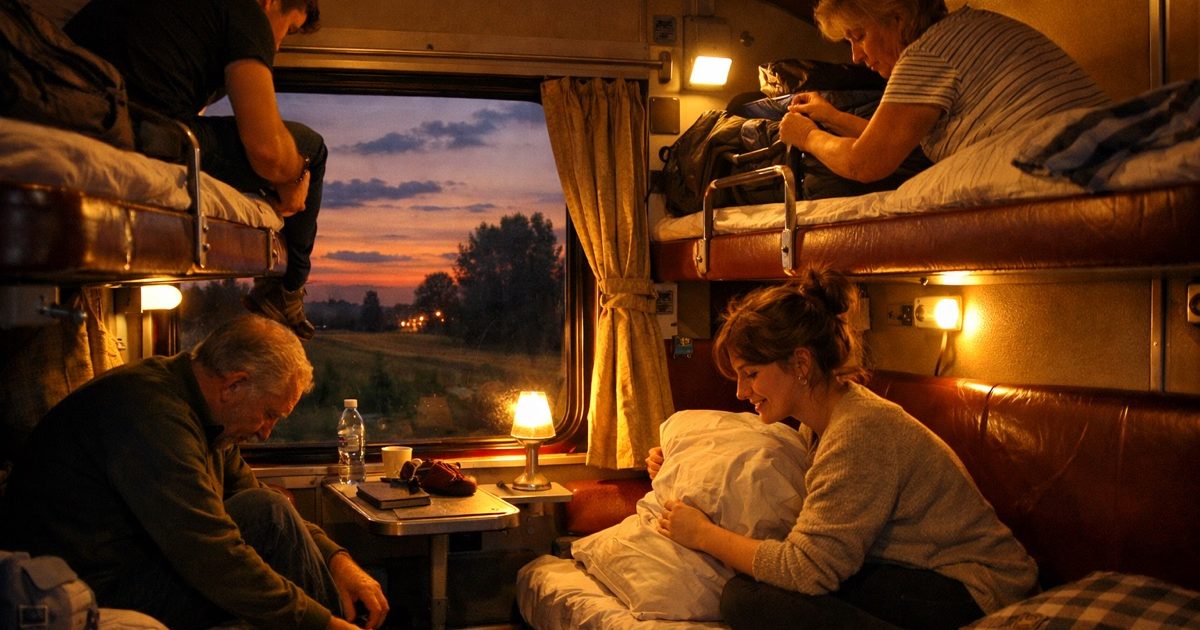
Platzkart is the most budget-friendly option. It is an open-plan sleeper car with rows of berths and no private compartment doors. It is social, lively, and usually the cheapest choice, but privacy is limited. Kupe is the standard private compartment class, typically with four berths behind a lockable door. It is the best balance of price and comfort for most travelers, especially if you want a quieter night and a place to keep your belongings more securely. SV is the most comfortable sleeper option, usually with two berths in a private compartment. It offers more space, less noise, and a better rest, but tickets can be significantly more expensive.
On newer or upgraded trains, you may also see differences in air conditioning, power outlets, bedding quality, and restroom condition. When booking, check the train number and carriage details rather than assuming all overnight trains are the same. For long routes, kupe is often the best value; for business travel or a special trip, SV can be worth the extra cost; and for solo travelers on a tight budget, platzkart remains a practical choice if you are comfortable with less privacy.
How to Book Tickets and Avoid Common Mistakes
The easiest way to book overnight train tickets in Ukraine is through the official Ukrzaliznytsia app or website. These platforms usually show real-time availability, carriage type, seat selection, and price. Tickets can also be purchased at station ticket offices, but for popular routes and holiday periods, online booking is usually safer and faster. In 2026, digital tickets are widely accepted, so you often do not need to print anything unless the specific route or carrier states otherwise.
Book as early as possible for Fridays, Sundays, public holidays, school breaks, and major city pairs such as Kyiv–Lviv or Kyiv–Odesa. The best seats in kupe and SV can sell out quickly, especially if the train departs in the evening and arrives early the next morning. If you need a lower berth, a female-only compartment, or a berth near the restroom, check the seat map carefully before paying. Always verify the departure station, because some cities have more than one rail station or suburban stop.
Common mistakes include buying a ticket for the wrong date, ignoring the arrival time, and underestimating transfer time after arrival. Another frequent issue is assuming that all sleeper cars are equally quiet. Carriage age, route popularity, and passenger mix can change the experience a lot. Before departure, keep your ticket accessible on your phone, and save screenshots offline in case mobile internet is weak at the station. If your trip is important or time-sensitive, arrive early enough to find the platform, car number, and seat without rushing.
What to Bring for a Comfortable Night on the Train
A good overnight train ride starts with smart packing. Even in a private compartment, the train is not a hotel room, so it helps to bring a few essentials. Pack a small overnight bag rather than a large suitcase for the compartment, and keep your main luggage easy to store under or near your berth. A compact bag also makes it simpler to take valuables with you if you need to step out at a station.
Bring water, light snacks, tissues, hand sanitizer, and any personal medication you may need during the night. A power bank is useful, but do not rely only on outlets, because not every carriage has working sockets at every berth. Earplugs and a sleep mask can make a major difference, especially in platzkart or on busy routes. A light blanket or extra layer is helpful because carriage temperatures can vary. In winter, bring warm socks and something comfortable to sleep in; in summer, a light hoodie can still be useful if the air conditioning is strong.
If you plan to eat on board, choose foods that are simple and low-odor. Avoid anything messy or strongly scented that could disturb other passengers. Keep important items such as passport, ticket, money, phone, and bank cards in a small pouch that stays with you. For foreign visitors, it is wise to carry a copy of your passport and visa or residence documents separately from the originals. A small flashlight or phone light can also help if you need to move around the carriage at night.
Etiquette, Popular Routes, and Staying Safe Overnight
Train etiquette in Ukraine is straightforward: keep noise down, respect sleeping passengers, and be mindful of shared space. If you are in kupe or SV, close the compartment door gently and avoid loud phone calls late at night. In platzkart, take extra care with conversation, music, and bright screens because the space is open to everyone. If you are sharing a compartment with strangers, a brief polite greeting is normal, and it is considerate to ask before using a shared table or adjusting windows.
Popular overnight routes include Kyiv–Lviv for western Ukraine, Kyiv–Odesa for the Black Sea coast, Kyiv–Kharkiv and Kyiv–Dnipro for major eastern and central connections, and Lviv–Odesa or Lviv–Kharkiv on selected services. Night trains are also useful for reaching regional hubs before morning connections. Because schedules can change, always confirm the exact departure time on the day of travel. In 2026, some routes may have newer rolling stock while others still use older cars, so comfort can differ even on the same line.
Safety is usually manageable if you stay alert and use common sense. Keep valuables on your person or locked away, do not leave your phone or wallet unattended while sleeping, and know where your berth and carriage number are before boarding. If a stranger makes you uncomfortable, contact the conductor immediately. Avoid opening the door to unknown people at stations, especially late at night. When arriving, plan your onward transport in advance so you do not have to negotiate hurriedly outside the station. For travelers carrying expensive electronics, cash, or documents, travel insurance and emergency support can be especially valuable. Overnight trains are generally safe and efficient, but a few simple precautions make the journey much smoother.
Continue reading
All articles
Booking Hotels in Ukraine: Best Platforms and Tips
Using ATMs in Ukraine: Fees, Limits, and Safety Tips
War Tourism in Ukraine: Ethical Considerations and Guidelines
Internet in Ukraine: VPNs, Blocked Services, and Online Safety
Women Traveling Alone in Ukraine: Safety and Practical Guide