Restricted and Front-Line Areas in Ukraine: Where Not to Travel
Why some areas in Ukraine are restricted
In 2026, travel in Ukraine is still affected by the ongoing war, so some regions remain dangerous, partially closed, or subject to special entry rules. The most important point for travelers is that “safe enough” can change quickly: a road that was open yesterday may be blocked today because of shelling, mines, military activity, or a new local order. This is especially true near the front line, in border districts, and in areas that have been recently liberated or are still under heightened security control.
Restricted areas are not only about active combat. They can also include evacuation zones, mined fields and forests, damaged bridges, curfews, and checkpoints controlling access to strategic infrastructure. Even if a place appears accessible on a map, that does not mean it is legal or safe to enter. Travelers should assume that local authorities and the military can restrict movement at short notice for security reasons, and those restrictions take priority over tourism plans.. Insurance Ukraine
For Ukrainians returning home and for foreigners visiting Ukraine, the rule is simple: do not treat online maps, social media videos, or old travel blogs as proof that an area is open. Use official sources and, when in doubt, choose another route or destination. We recommend building every trip around current safety information rather than fixed assumptions.
Areas you should avoid
The highest-risk areas are the front-line and near-front-line zones, where artillery, drones, air strikes, and mines may be present. This includes parts of Donetsk, Luhansk, Zaporizhzhia, and Kherson oblasts, especially locations close to the current line of contact or areas repeatedly mentioned in official evacuation notices. Conditions vary by district and village, so even within one oblast some places may be passable while others are completely unsuitable for civilian travel.
You should also avoid border zones with special security regimes, military training areas, and any territory marked as mined or uncleared. In some regions, access to forests, beaches, fields, riverbanks, and abandoned buildings may be restricted because of unexploded ordnance or landmines. Do not enter damaged industrial sites, destroyed residential blocks, or abandoned checkpoints, even if they look empty. These locations can be unstable, monitored, or contaminated by explosives.
Another category to watch is temporary restricted zones around critical infrastructure, government buildings, airports, rail facilities, power stations, and bridges. These areas can be closed during alerts, inspections, or repairs. If you are planning a road trip, do not assume that a direct route is available; a detour may be mandatory, and sometimes the safest choice is to skip the area entirely.
How military checkpoints work
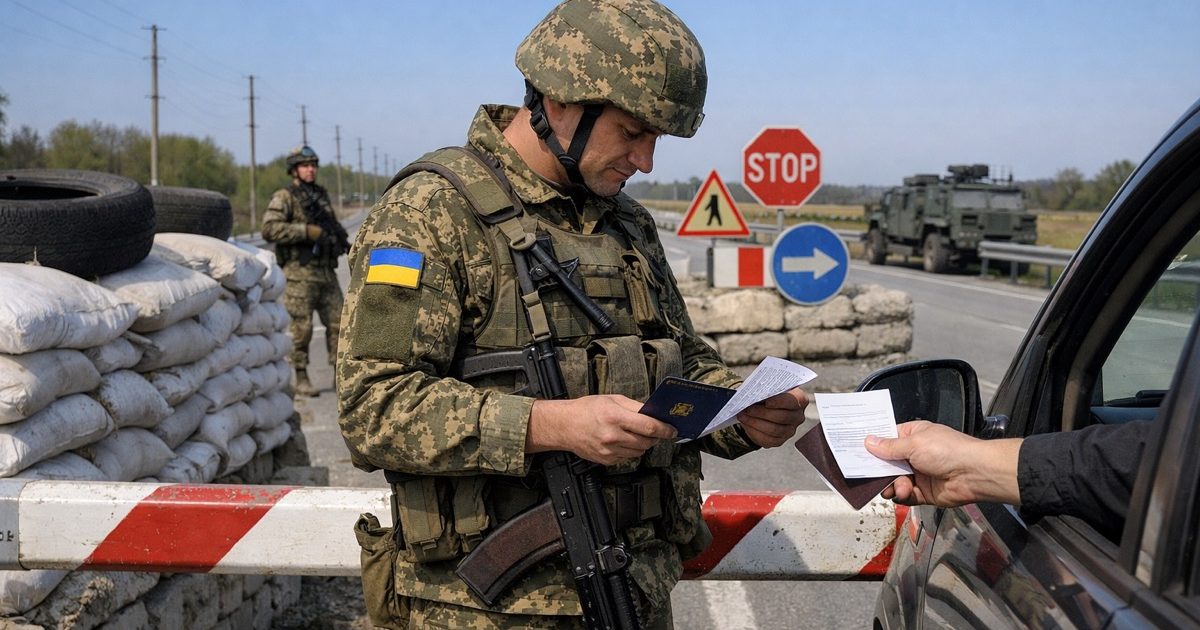
Military and police checkpoints are common in many parts of Ukraine, especially on major routes leading toward sensitive regions. Their purpose is to verify documents, control movement, and keep travelers away from dangerous or prohibited areas. A checkpoint may be permanent, temporary, or mobile, and its location can change depending on the security situation. Expect queues, vehicle inspections, and questions about your route, destination, and reason for travel.
Carry your passport or ID at all times, along with any documents that support your trip, such as hotel booking details, invitation letters, residence registration, or vehicle papers. If you are driving, keep your registration, insurance, and driver’s license ready. Be polite, answer only what is asked, and follow instructions immediately. Do not film personnel, equipment, or the inspection process unless you are clearly allowed to do so; in sensitive areas, recording can lead to problems.
If a checkpoint turns you back, do not argue or try another road through fields or side streets. That can be dangerous and may be treated as deliberate evasion. The safest response is to accept the instruction, turn around, and find an alternative route. If you are unsure whether a road is open, ask your hotel, local administration, or trusted transport operator before you depart.
How to check the current status before you go
The best way to verify a destination in 2026 is to combine several current sources. Start with official regional military administrations, local councils, and State Emergency Service updates. These sources may announce evacuations, curfews, road closures, mine warnings, or changes in access. For border regions, check the State Border Guard Service and any local entry rules. For roads, look for alerts from the National Police, Ukravtodor, or local authorities responsible for traffic management.
Next, confirm with your transport provider, hotel, host, or tour operator on the same day you travel. A bus route, train connection, or taxi transfer can be suspended without much notice. If you are driving, ask about fuel availability, checkpoints, and road conditions, not just the distance on a map. In areas with unstable mobile coverage, download offline maps and keep a paper note of your destination, emergency contacts, and the nearest safe town.
Do not rely on one Telegram channel or one social media post. Unverified posts can be outdated or simply wrong. If a location is mentioned in evacuation notices, mine-risk alerts, or repeated security warnings, treat that as a clear sign to avoid it. Before traveling, compare the current situation with your route and be ready to change plans immediately if the status worsens.
What happens if you enter a restricted area without permission
Unauthorized access can lead to immediate detention, questioning, fines, or removal from the area by military or law-enforcement personnel. In more serious cases, you may face administrative or criminal liability, especially if you ignore a lawful order, interfere with operations, or enter a zone closed for security reasons. If you are a foreigner, a violation can also create immigration problems, damage your ability to stay in the country, and complicate any future travel to Ukraine.
The physical risks are often greater than the legal ones. Restricted zones may contain mines, unexploded shells, damaged roads, unstable buildings, or active surveillance and defensive positions. A seemingly short detour can put you in danger within minutes. Emergency services may also have limited ability to reach you quickly, particularly near the front line or during air alerts. In short, going “just to look” is never worth it.
If you accidentally enter a closed area, stop as soon as it is safe, do not continue exploring, and follow the instructions of the authorities you meet. Be honest about how you got there, avoid arguments, and leave the area as directed. If you have travel insurance, remember that some policies may exclude incidents caused by travel into officially restricted or high-risk zones, so an unauthorized trip can also leave you without financial protection.
Safer planning rules for travelers in 2026
Plan conservatively and keep your itinerary flexible. Choose destinations that are clearly outside active or restricted zones, book accommodation with free cancellation when possible, and avoid late-night arrivals in unfamiliar areas. If you are traveling for work, humanitarian activity, or family reasons near sensitive regions, coordinate your route with local contacts and build extra time for checkpoints and diversions. In many cases, the best safety decision is to stay in a nearby city rather than try to reach a village or district with uncertain access.
Before each leg of the trip, check whether there are curfews, evacuation orders, or temporary bans on movement. Keep your phone charged, carry power banks, and save emergency numbers offline. If you are crossing multiple oblasts, update your plan every morning rather than relying on the original booking. For peace of mind, consider a travel protection plan that is designed for current Ukrainian conditions; This site can help travelers understand what is covered and what is not before they move.
Most importantly, respect local warnings even if the area looks calm. In Ukraine’s current security environment, a quiet street does not necessarily mean a safe one. The safest traveler is the one who checks status before departure, follows checkpoint instructions, and knows when not to go at all.
Continue reading
All articles
Spring Travel in Ukraine: Cherry Blossoms and Cultural Awakening
Autumn in Ukraine: Golden Landscapes and Harvest Season

Romantic Getaways in Ukraine: Best Destinations for Couples

Alcohol Laws in Ukraine: What Travelers Should Know

Foreign Embassies and Consulates in Ukraine: Complete Directory