South Africa
Visa requiredWhat changes when you travel to Ukraine
Quick reference for travelers from South Africa.

- Capital
- Pretoria Kyiv
- Currency
- South African rand (ZAR) Ukrainian hryvnia (UAH)
- Phone code
- +27 +380
- Language
- Afrikaans, English Ukrainian
Entry rules for South African citizens: how to obtain a visa to enter Ukraine
South Africans must obtain a short-term type C visa to this website, which allows a stay of up to 90 days within a 180-day period. A type C visa is issued for the following purposes: TourismBusiness tripsPrivate visitsCultural or sports events
- Tourism
- Business trips
- Private visits
- Cultural or sports events
Where can South Africans apply for a short-term visa to Ukraine?
To apply for a visa, a South African citizen must contact one of the authorized institutions: ✔ A Ukrainian diplomatic mission abroad (Embassy or Consulate in South Africa). ✔ The Consular Department of the Ministry of Foreign Affairs of Ukraine. ✔ The MFA representative office in Ukraine. Application timeframe: Documents can be submitted no earlier than 3 months before the planned trip.. Travel insurance for Ukraine
What documents are required to obtain a visa for Ukraine?
- Bank account statements
- Income certificates
- Sponsorship letter ✔ A recent passport-sized photo. 35×45 mm, taken recently. ✔ Receipt for visa fee payment ✔ Proof of travel purpose (one of the following):
- Hotel booking or tourist voucher
- Invitation from a private individual or company
- Event invitation (conference, exhibition, etc.) Ensure all documents meet consular requirements to avoid visa rejection. ure that a trip to Ukraine during the war is safe and does not carry additional risks, it is important to take out reliable insurance that will cover not only basic medical services, diagnostics and treatment, but also the risks associated with a full-scale invasion of Russia. You can take out reliable insurance that will guarantee compensation in case of traumatic injuries, accidents, and death as a result of military operations on the this website website. Foreign citizens (except for Russian citizens), stateless persons, and citizens of Ukraine can purchase an insurance policy. There are no age restrictions, and both minors and elderly people over 70 can take out insurance. With travel health insurance in Ukraine, you can enjoy every moment of your trip knowing that you are protected in case of any unforeseen circumstances. Choose the insurance that will give you peace of mind on your trip to Ukraine.
How much does a visa to Ukraine cost?
The visa fee depends on several factors: Standard processing: $65 USDUrgent processing: $130 USD (double the standard fee)Visa for children under 18: Free of charge Important! If you have previously overstayed in Ukraine, a visa can still be issued, but you may need to pay a fine.
- Standard processing: $65 USD
- Urgent processing: $130 USD (double the standard fee)
- Visa for children under 18: Free of charge
How much money do travelers from South Africa need to enter Ukraine?
- According to Cabinet of Ministers of Ukraine Resolution No. 884, travelers must prove sufficient financial means for their stay. The required minimum is calculated using the formula: FO = ((20 × Pm) ÷
- × (Kd +
- Where: Pm – subsistence minimum (3,209 UAH in
- Kd – the number of days of stay
Safety during travel to Ukraine
Due to the current situation in Ukraine, medical insurance for tourists from South Africa is not only a mandatory requirement but also an important safety measure. Your insurance policy should cover: ✔ Emergency medical care ✔ Repatriation in case of an accident ✔ Risks associated with military actions
How to prove the purpose of travel when applying for a visa?
To confirm the reason for the visit, travelers from South Africa must provide: ✔ A hotel booking or rental agreement ✔ An invitation from a Ukrainian citizen (relatives, friends) ✔ A tourist voucher ✔ Medical documents for treatment in Ukrainian clinics ✔ Tickets to a third country (for transit purposes) Tip: The easiest way to justify your trip is through a notarized invitation.
Frequently asked questions from South Africans about traveling to Ukraine
- Can a short-term type C visa be extended? Yes, under certain conditions. However, the total stay cannot exceed 90 days within 180 days
- Can I obtain a visa upon arrival in Ukraine? No, short-term visas must be obtained in advance at a Ukrainian consulate or embassy
- Is medical insurance required for a visa application? Yes, an insurance policy with a minimum coverage of €30,000 is mandatory
- Can I apply for a visa through an agency? Yes, you can use the services of accredited visa agencies or legal assistance services
- Can I fly to Ukraine now? Find answers to the most common questions here: Can you fly to Ukraine now?
To be imported into Ukraine, all animals must have:1. Microchip for pets. Your pet must be chipped with a 15-digit unencrypted microchip that complies with the ISO 11784/11785 standard.2. Vaccinations. Your dog or cat must have a valid rabies vaccination after chipping.3. Health certificate. A licensed veterinarian must complete an EU medical certificate for Ukraine 10 days before travel. If your pet is traveling from the United States, the veterinarian must be accredited by the USDA and the health certificate must be certified by the state Department of Agriculture office. If you are traveling to Ukraine from another country, the forms must be certified by the state body responsible for the import and export of animals.To learn more about the rules for importing your pets, follow the link.
What can be imported from abroad
- Personal belongings
- goods that cost no more than 500 euros and weigh up to 50 kg
- edible products not for sale, which cost up to 200 euros
- cash (both hryvnia and foreign currency) in the total amount of up to 10 thousand euros. If the amount is larger, you must present a bank certificate stating that this amount was withdrawn from your personal account
- medicines (except for narcotic and psychotropic substances) in the amount specified by law: no more than 5 packages of each medicine per person. Red customs corridor Using the “red” customs corridor, it is allowed to transport items that must be declared in writing, namely
- goods that require permits
- currency and cultural values
- securities and payment documents
- drugs containing narcotic, psychotropic substances or precursors
- goods more expensive than 500 euros and heavier than 50 kg. Please note! Taxes are calculated on the basis of the value of the goods, for which you should present the customs officer with sales receipts, labels, and other available documents. If you do not have such documents, customs officers will have to determine the customs value of the goods based on the prices of identical or similar goods.
What is prohibited to import to Ukraine
- Drugs, narcotic and psychotropic substances;
- explosive and poisonous substances;
- food products without a certificate;
- printed and video materials promoting violence, racism and war, pornography;
- unidentified animals;
- cultural property declared wanted;
- cold, firearms, gas (spray) weapons without the permission of the Ministry of Internal Affairs.
- goods exported in connection with leaving Ukraine for permanent residence in another country
- goods inherited by a non-resident citizen in Ukraine, provided that the composition of the inheritance is confirmed by a notary
- goods temporarily exported by resident citizens across the customs border of Ukraine in the presence of a written obligation to return them.
- Lard and sausages;
- cheese, milk and dairy products;
- fresh meat;
- more than 20 kg of fish and 125 g of sturgeon caviar (for larger amounts, a special permit is required).
- Medicines with narcotic or psychotropic substances that are not intended for medical use;
- Potent medicines, unless they have a prescription from a doctor;
- medicines with a volume of more than 500 ml.
- Cold, pneumatic and firearms and accessories;
- explosives and gas canisters;
- Toxic and poisonous substances;
- household appliances (more than 1 item);
- minerals that are in the public domain;
- endangered plants and animals;
- cultural monuments (without appropriate permission);
- equipment with pornographic materials or unlicensed software;
- materials calling for racism or violence.
- Weapons and ammunition;
- narcotic and psychotropic substances;
- potent poisonous, radioactive, explosive substances;
- works of art, cultural and historical values;
- canceled securities;
- items exported in violation of intellectual property.
- In the pedestrian (residential) zone – 20 km/h.
- In settlements (cities), the maximum speed is 50 km/h.
- On roads outside of settlements, you are allowed to drive at a speed of 90 km/h.
- If the road outside the city is equipped with a dividing strip, the speed limit is 110 km/h.
- On highways, the speed limit is 130 km/h.
- Be as focused as possible on the road and keep a close eye on all road users, while following the traffic rules. This is important because you must be prepared for danger at all times
- Be prepared to give way, even where, according to the rules, you have the right of way. After all, on the roads of Ukraine, mainly in cities, there are now many patrol cars (police, military, ambulances and other first responders) that can respond to a call or potential danger at any time
- Do not approach military vehicles or record their movements. Firstly, it is prohibited by the legislation of Ukraine, and secondly, as a rule, military equipment has poor visibility, and therefore you may not be noticed on the road
- Do not exceed the speed limit and carefully monitor the road conditions, even if there are no other road users on the road besides your car. There may be defensive structures on the road, or incompletely dismantled checkpoints. These obstacles can cause an accident, especially if you hit them at high speed
- Follow the rules of behavior at checkpoints
- When approaching an equipped checkpoint, drivers should slow down and prepare their documents for possible inspection. Please note that the dashcam must be turned off and removed from the windshield, as well as the phone
- When approaching the checkpoint, you will notice a “STOP” sign – you need to stop near it, then turn off your headlights and turn on your hazard lights
- Wait for the military to signal you with their hands or a flashlight. Drive up to them slowly, but do not get out of the car unless asked to do so. To communicate with the military, lower the side window
- At the request of an authorized person, allow the trunk and interior of the vehicle to be inspected. After passing the inspection, you can start driving only after the permission of the inspector. Driving should be slow, as a sharp increase in speed may arouse suspicion. What is checked at checkpoints? – Documents of persons – belongings (inspection) – vehicles; – luggage and cargo
- Signaling with hazard lights while the vehicle is moving means “thank you” or “excuse me” depending on the context of the situation. For example, if you let someone pass you on the road, you will most likely be thanked with a hazard light.
- short headlight signals (flashing) from a passing car
- you are asked to give way.
- signals (flashing) from the headlights of the oncoming car warn of danger ahead. However, please note that in the dark, this may mean that you have not switched your high beams and may have blinded another driver on the road, so make sure you have your low beams on.
- A left turn signal (in some cases with brake lights) from a truck in front of you warns you that you are not allowed to overtake because there are cars in the opposite lane. Conversely, a right turn signal (in some cases with brake lights) means that the oncoming lane is clear and you can overtake.
Goods you can export from Ukraine
What cannot be exported from Ukraine
Rules for foreigners to enter Ukraine by car with foreign license plates
Rules for transporting children in a car
The law prohibits the transportation of children under the age of 12 without seat belts and child seats. It is prohibited to transport children in the front seat without a child seat. Children over the age of 12 must wear seat belts.
What you need to know about driving in Ukraine during martial law
Drivers should be prepared for some unexpected situations that, unfortunately, often occur on Ukrainian roads today.
Rules for driving through a checkpoint
There are checkpoints in Ukrainian cities and between regions where the military may resort to checking civilians.
What do the signals given by other drivers in Ukraine mean?
Frequently asked questions
Visa requirement for citizens of South Africa entering Ukraine: Visa required. Always check the latest rules with the nearest Ukrainian embassy or consulate before you travel.
Your passport must be valid at least 3 months from your planned date of entry into Ukraine. Border officers may deny entry to travelers whose passport falls below the minimum validity window.
Insurance policy is required. Make sure your policy covers medical evacuation and includes a war-related rider — most off-the-shelf travel policies exclude active conflict zones by default.
The official currency in Ukraine is the Hryvnia (UAH, ₴). Major credit and debit cards (Visa, Mastercard) are widely accepted in cities, restaurants, and hotels, but carry some cash for smaller towns, markets, and rural areas. ATMs are common in Kyiv, Lviv, Odesa, and other regional centers.
Dial 112 for the unified emergency number — operators speak Ukrainian, English, and often Russian. Direct service numbers: 102 (police), 103 (ambulance / medical), 101 (fire). Save these in your phone before arriving.
Ukrainian is the official state language. Russian is widely understood in many regions, especially in the south and east. English is commonly spoken in hotels, popular tourist sites, and major cities — staff in Kyiv and Lviv frequently switch to English on request.
Related country guides — Africa
All country guides

Useful Articles for Your Ukraine Trip
All articles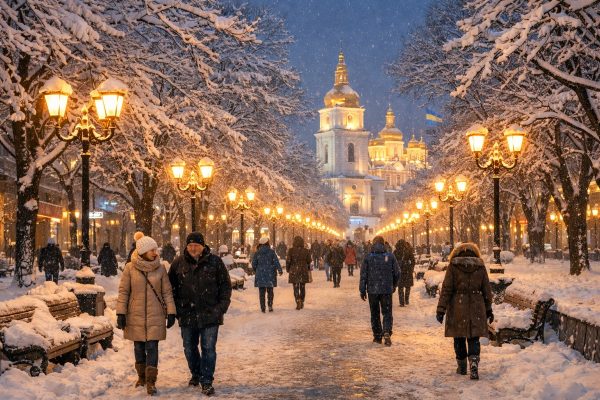
Winter Travel in Ukraine: What to Expect and How to Prepare

Tap Water in Ukraine: Is It Safe to Drink?

Essential Ukrainian Phrases for Travelers
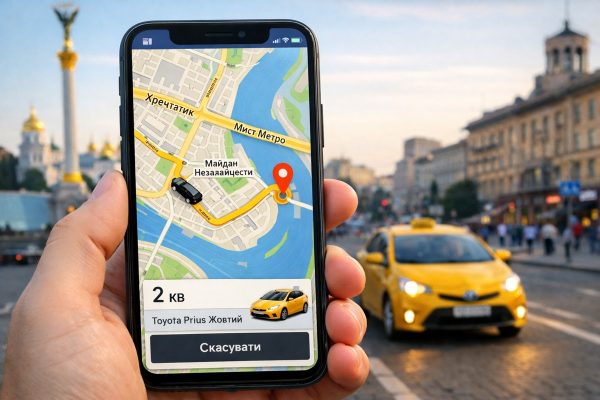
Taxi and Ride-Hailing Apps in Ukraine: Uber, Bolt, and Uklon

Train Travel in Ukraine: A Complete Guide to Ukrzaliznytsia